
Creative Writing Classes
in London
Write your novel without quitting work or paying university fees.
- Try a class first
- Maximum 15 writers
- No academic entry requirements
- One class per week

FULFIL YOUR DREAM OF WRITING A NOVEL
Whether you want to write a novel or short stories, our part-time, two-year degree-level programme makes that aspiration a reality. Our course helps you to understand the craft of writing and provides the support and structure to get your writing on the page. Every year, our students achieve their writing dreams. Will you join them?
Two-year course
The Creative Writing Programme
For novel or short story writers — or anyone figuring out their form. No experience needed.
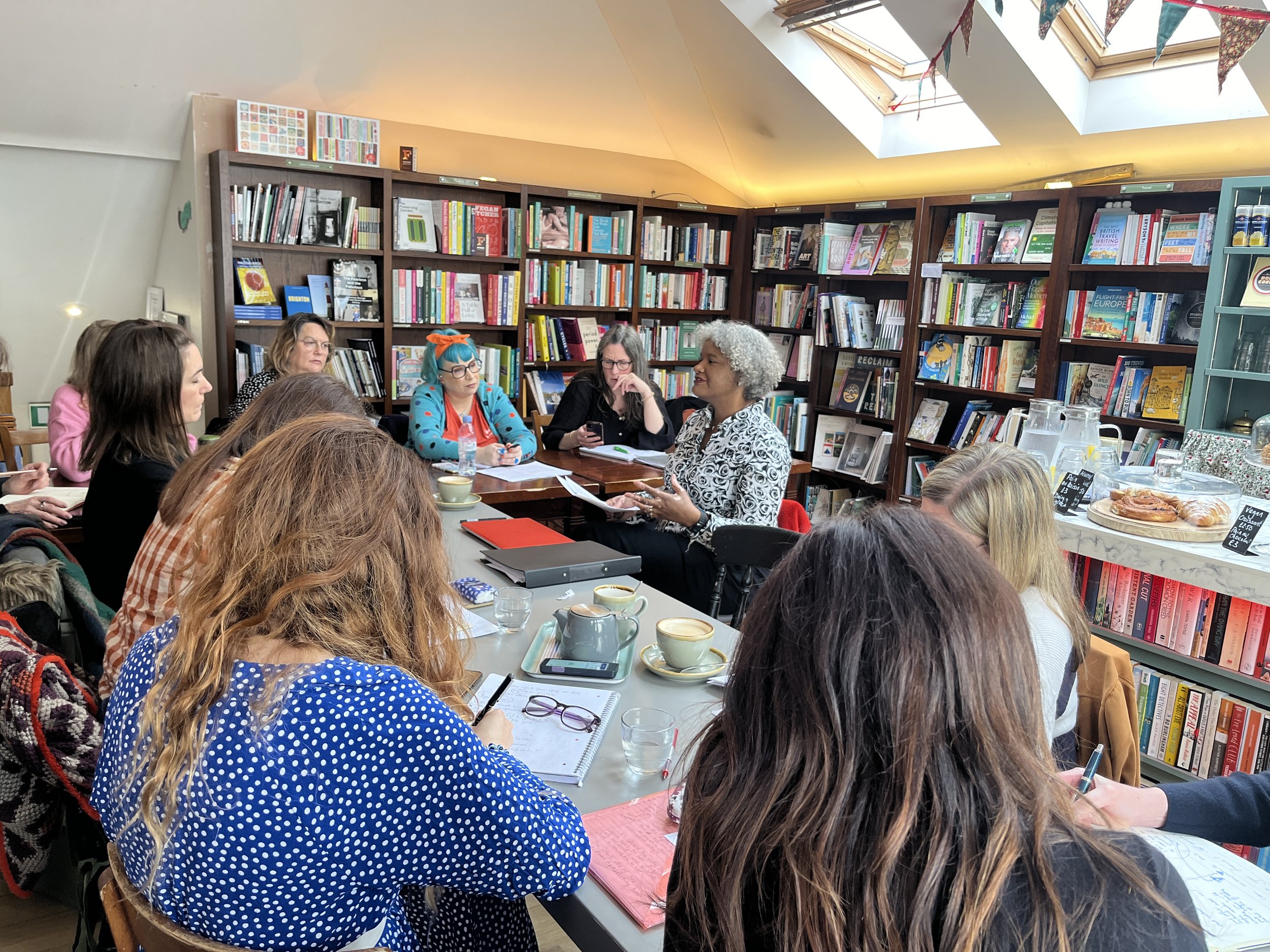
You'll cover characterisation, voice, point of view, setting, structure and editing through weekly exercises and published-work analysis, plus you'll have access to an online forum to share work with your fellow writers. Find out more.
Start date: 30 September 2026
CREATIVE WRITING TRAINING WITHOUT THE COST OF UNIVERSITY
Choose university for the letters after your name. Choose The Creative Writing Programme to learn the craft of writing and write your novel.
← Swipe to compare →
 BEST FOR WRITERS
The Creative Writing Programme is taught at degree level but is not an accredited university degree. Students do not receive a BA or MA qualification.
A look at life on the course
← Swipe to see more →


HEAR WHAT THE PROGRAMME FEELS LIKE FROM THE WRITERS WHO TOOK IT
STRUCTURE, FEEDBACK AND TANGIBLE PROGRESS
Don't just listen to us. Here's what our students think.
“A first-rate experience, run by outstanding tutors.”
“By the end of the course I had a tangible draft.”
Lisa Fransson credits the programme with setting her on the path to becoming a working author.
FREQUENTLY ASKED QUESTIONS
Updated June 2026
-
We recommend you set aside up to 12 hours a week. This is for preparation and reading for your class, actual class time (2.5 hours a week) and follow-up exercises plus any additional reading/writing to consolidate your learning. The course is very much what you make of it. The more time you can spend on reading and your own writing, the quicker your progress will be. But we understand that people have busy lives and some weeks this won’t be possible. If you are prepared to sacrifice some of your free time, it’s possible to combine the course with a full-time job and caring responsibilities. Many of our students do.
-
None at all. You just need the passion to write and the commitment to follow through. Being a keen reader also helps.
-
This is one of our most common FAQs. No, we don’t conduct interviews for our first-year writers. If you want to join a first-year group all you need to do is enrol. If you want to join a second-year group or our Advanced Writers’ Workshops, you will need to write to us (email cathy@creativewritingprogramme.org.uk) outlining your previous writing experience. If you’re unsure about committing to a two-year programme, we run a ten-week course as an Introduction to Creative Writing, which starts in January and April each year, which will give you a grounding in the craft and help you to decide whether you want to embark on the two-year programme.
-
Yes. We want to support writers who face barriers to pursuing their writing careers. This includes writers who are from under-represented communities (BAME, LGBTQ+ and other under-represented groups), isolated, unemployed, or have a longterm illness or disability. We offer a very limited number of discounted places – typically worth up to 25% of the course fee – on our courses each year. Email Cathy Hayward at cathy@creativewritingprogramme.org.uk for details.
Even if you don’t receive a bursary, we do offer a university-level course at a fraction of the cost you would pay if you went to university. You can pay in two instalments over the year to spread the load. This means that when you’ve finished the course it’s all been paid for and you’re not £10,000s in debt. And you could have the first draft of a novel or memoir.
-
Most university courses in creative writing are taught in tandem with English studies and the university exam boards insist on there being up to 50% academic subject matter to make it a ‘proper’ subject. That means you might have to take courses in post-colonial theory, the legacy of modernism or medieval poetry. Don’t get us wrong. These are important and interesting subjects, but our experience of teaching in higher education is that most writers want to focus on learning how to write well and that academic study and literary theory can be distracting and actually block the flow of their writing. We would recommend these kinds of university courses to writers who are interested in academic study. If you’re not, be careful! Read the small print and course structure before you commit. On the Creative Writing Programme, we have developed a process-based approach which focuses on ‘doing’, like an art school or music academy. If we use theory we only use it in the context of understanding how to construct compelling, dramatic narrative.
-
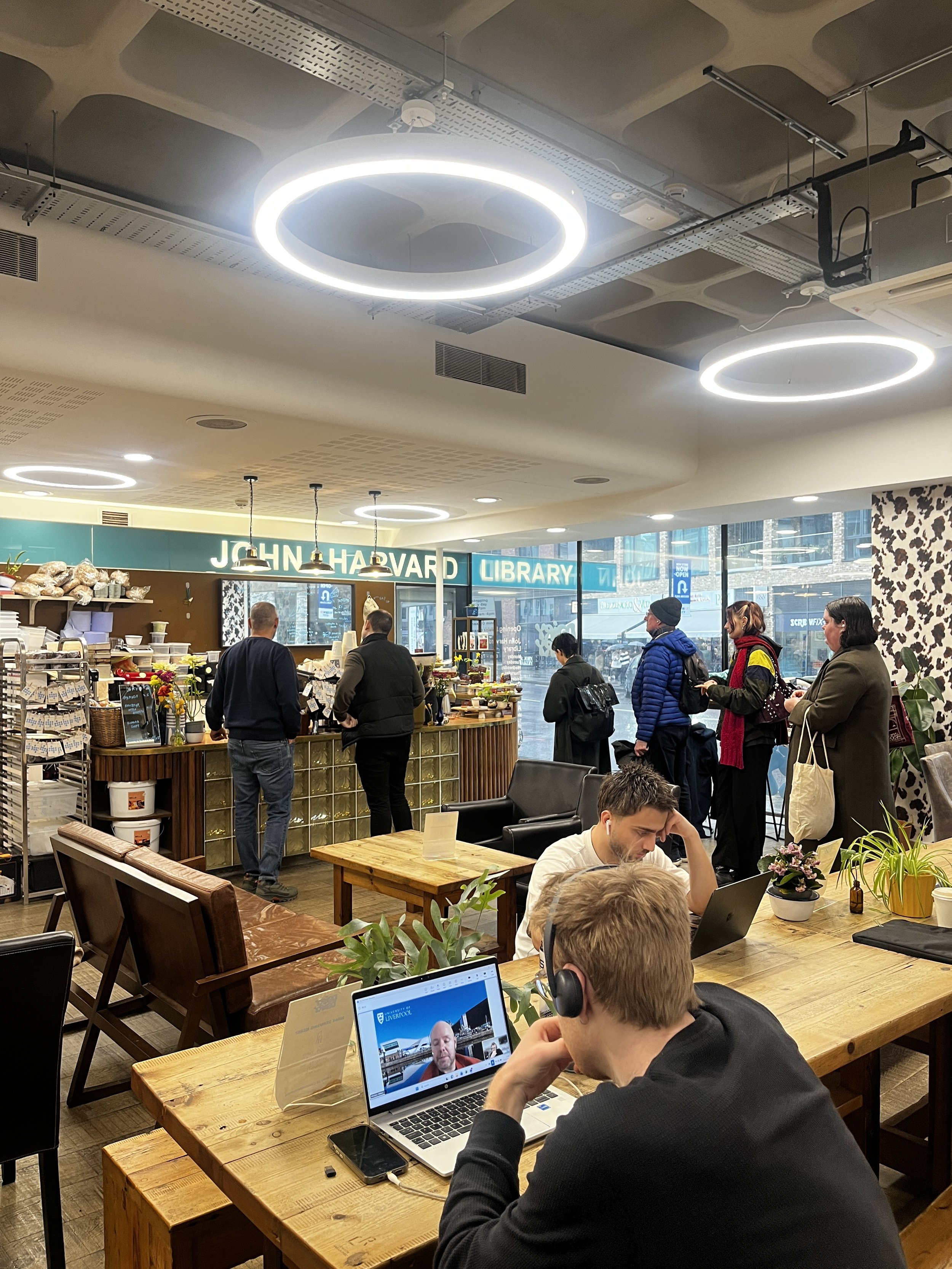
You can take an in-person course at our centres in Brighton, Worthing, Eastbourne, East Grinstead, Hastings and London or an online course from anywhere in the world. If you decide to study online for convenience, you can still join in-person masterclasses and student readings.
-
We can’t get you published, but yes, we can help. Every year in June we hold a Publishing Day. Publishing Day is available for free to writers on our courses along with all alumni. It’s a day of discussion and conversation with our friends from the professional world of publishing aimed at helping our writers promote their own work and plan a path to publishing their work. For writers with finished first drafts we offer market feedback with literary agents from established agencies.
-
The Creative Writing Programme and the Life Writing Programme are two-year part-time programmes. The autumn term is 10 weeks, the spring/summer term 15 weeks. Taught sessions are 2.5 hours per week. Writers also take masterclasses twice a year in the Easter and summer holidays. You will usually have two tutors over the two years. We do this to ensure that your tutors get to know you and your work and are best placed to offer editorial advice during the four one-to-one tutorials over the two years. There are four creative submissions over the two years totalling 20,000 words, as well as formative work submitted during each term. For more detailed information on course structure go to Our courses.
-
No, you don’t. We are a broad church with a wide door. At the beginning of the year, your group will probably have some experienced writers in it as well as some beginners – people who perhaps haven’t written creatively since school but have a strong desire to write a novel or memoir. We think the mix of experience at the beginning of the year is a good thing. Our groups are very supportive and everybody learns from everyone else, regardless of prior experience. We also offer the Introduction to Creative Writing 10-week course, which starts in January or April each year, for those who want to try a shorter course before they commit.
-
No, you can take one of our online courses from anywhere in the world. Our online courses follow exactly the same pedagogic structure as our in-person courses. The only difference is that your in-person experience will be online. We use video conferencing technology Zoom for our online courses, so your taught sessions are always ‘live’ with your tutor and other writers in your group. Tutors use Zoom break-out rooms to discuss work in small groups. Some of our masterclasses are held online as well as our student readings. The end-of-year Publishing Day is also online so you can have a full experience as an online student.
-
The Creative Writing Programme and the Life Writing Programme are two-year, part-time courses. Each year runs from late September/early October to the end of May. There are 25 weeks in each year. Our Advanced Workshops meet every month for 10 months and our Advanced Poetry Workshops is a 10-week or 20-week course. The Beginners Poetry course is 20 weeks long. Most courses start at the beginning of October apart from The Introduction to Creative Writing course which starts in January or April each year.
-
There is no official exam board on the Creative Writing Programme. We are an independent writing school, so we cannot offer accredited qualifications – that is one of the ways in which we can ensure our fee structure is so competitive in relation to university courses … and other courses for that matter. At the end of your two years, you will receive a certificate of attendance. Writers from our programmes have successfully used their two years on the Creative Writing Programme as the equivalent of a year out of a university degree through a process called accreditation of prior learning. Some students go on to complete an MA in creative writing while others use the course to launch a writing career. Many of our students become published writers after finishing the programme.
-
If students cannot make a class for whatever reason, they can catch up using the tutor’s notes on our online learning platform or by chatting to other students before/ after the next class. Recording sessions can make students feel inhibited or stressed, and views shared in the moment can come across differently on a recording. In only very exceptional circumstances, and at the tutor’s discretion, the tutor may record a class. This will only happen if all students give permission in advance of the class – if even one person is uncomfortable with the idea, then recording won’t happen. Students can refuse permission privately to the tutor. The recording will only be sent to the student(s) who missed the class and only on request. It cannot be uploaded to the Moodle platform – our online learning tool. Students who receive the recorded session must agree not to share it, and to permanently delete it once viewed. The recording will be sent via a secure, encrypted platform such as WeTransfer which is free to use. In-person sessions cannot be recorded and students cannot join remotely as this is disruptive.
-
It’s essential to have a good tutor. On the Creative Writing Programme you will usually work with two tutors over the two years. It’s not always easy and you won’t always agree with them, so it’s important to be prepared to be challenged and ultimately to reserve the right to ignore advice in the understanding that sometimes you’re just not in the right place to hear it and make use of it. Sometimes it can take a year or two for things to ‘click’ and finally see what it is that someone has been telling you about your work. You’ll never find the perfect tutor, because like everyone, a good writer has strengths and weaknesses and this will influence what interests them in your work. They also have a world view that may differ from yours. Regardless of these differences, our focus on the Creative Writing Programme and Life Writing Programme is the impact of the story. Regardless of the subject, genre or style our tutors will offer advice designed to help your writing communicate with and affect your reader, for it to be greater than the sum of its parts.
-
We have had many dyslexic writers on the Creative Writing Programme over the years. Research suggests that writers with dyslexia have a greater than average ability to combine unusual and interesting ideas, which is clearly going to contribute creatively to the writing process. They also tend to think visually which is an important creative writing skill. There are many famous writers who have had some degree of dyslexia: Scott Fitzgerald, Agatha Christie, WB Yeats, Flaubert, Benjamin Zephaniah, Irvine Welsh and John Irving among them.
-
We welcome writers with medical conditions, disabilities and additional support needs and will make the necessary adjustments wherever possible. In order that we can create a positive and safe experience for everyone, it is important that we are aware of any medical condition, disability, or access requirements you may have. If you have any specific needs, please discuss with our course director Cathy Hayward cathy@creativewritingprogramme.org.uk who will then share with your tutor, where needed and where you give permission, and arrange for the necessary adjustments. This information will be treated in the strictest confidence.